Blog ·
Why law firms should check in during the matter, not after it
End-of-matter surveys arrive too late to help. Why a short client check-in at the start and midway catches problems while you can still fix them.
Plenty of law firms send a feedback form when a matter closes. By then, the client's experience is already set. If they felt ignored during a four-month transaction, a survey at the end only tells you what went wrong, not how to fix it for them.
The problems that become complaints start in the middle
The issues clients complain about most are rarely about the legal work itself. In 2025/26, poor communication and delay were the two most common complaint types the Legal Ombudsman received, together making up 46% (Legal Ombudsman, 2025/26 annual complaints data). Residential conveyancing accounted for 36% of accepted complaints, more than any other area.
Those problems build up during the matter: a client who hasn't heard anything for three weeks, who doesn't understand why the searches are taking so long, or who feels nobody is answering their calls. Each of those is fixable with a phone call, if you know about it.
What a good check-in looks like
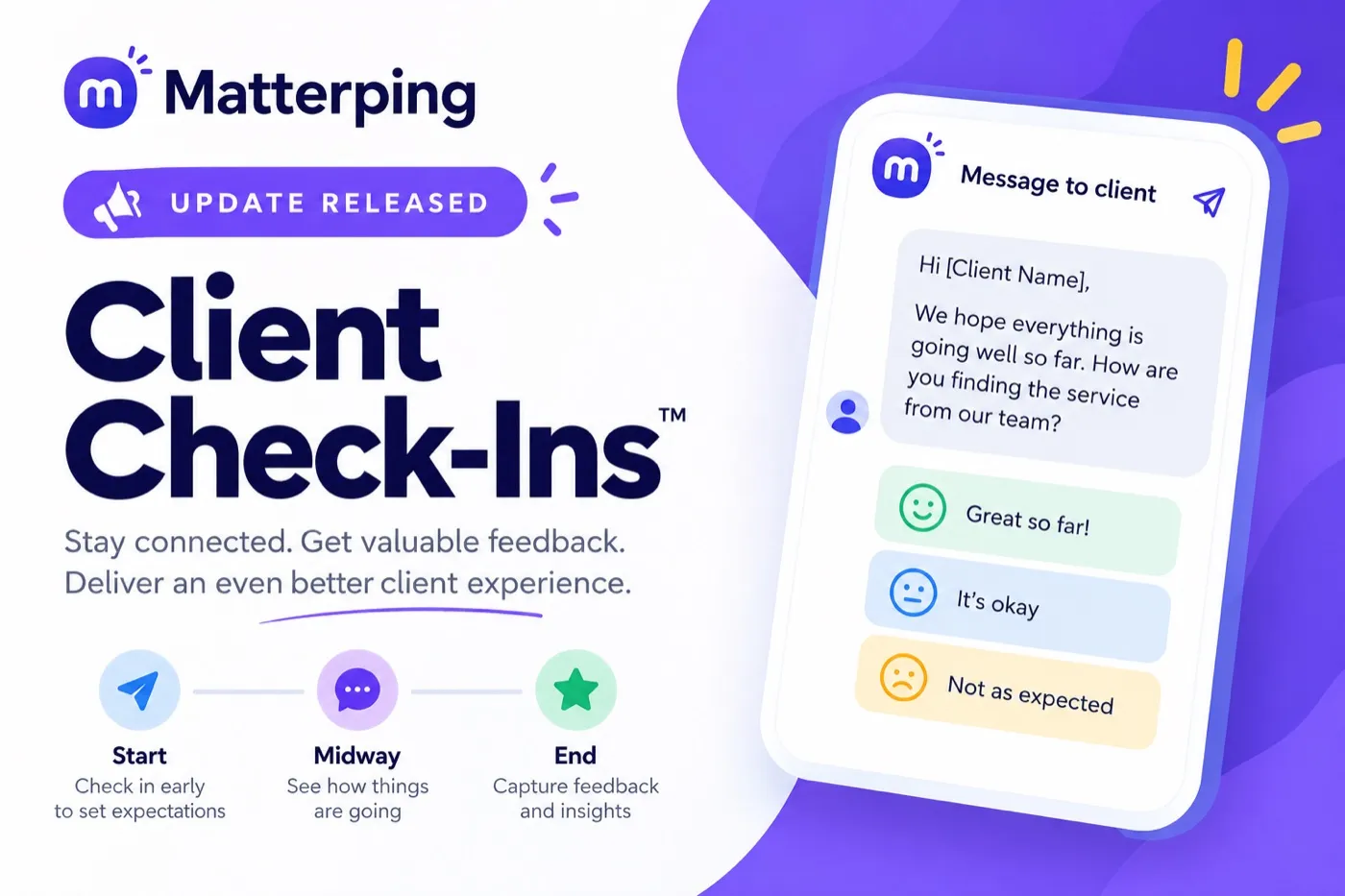
- Early: a few days after instruction, check the client understood what happens next. Confusion at the start drives calls all the way through.
- Midway: ask whether they feel updated often enough. This is the question that catches silence before it turns into frustration.
- At the end: ask whether they were happy overall, and what you could have done better.
- Short: one question at a time, answered with a tap. Long surveys get ignored.
- Acted on: every negative answer should reach a person who can call the client the same day.
It's part of good client care
For conveyancing firms in the Law Society's Conveyancing Quality Scheme, the Client Service Charter already commits firms to "We will keep you informed of progress in your sale or purchase" and to ask for feedback on their service (Law Society Conveyancing Quality Scheme, Client Service Charter). The Legal Ombudsman's good practice for conveyancers includes updating clients "even when there is no news" (Legal Ombudsman, Spotlight on Residential Conveyancing).
Regular check-ins are a practical way to do both on every file, not just the ones where someone remembers.
Make it automatic
The hard part isn't knowing that check-ins help. It's remembering to do them on every matter, every time, when the team is busy. That's why we built Pulse: check-ins go out automatically at the times you choose, clients answer Yes or No on WhatsApp, and every No goes straight to a reviewer.
Combined with automatic stage updates, clients hear what's happening and get asked how it's going. That's the combination that keeps them informed, happy, and recommending you.